Long before sustainability became a mainstream conversation in fashion, I began exploring how our wardrobes reflect our values, identity and confidence – That journey eventually led to founding Ethical Brand Directory and becoming known as The Sustainable Stylist.
Today (2026) my work sits at the intersection of style, sustainable luxury and identity. I help women and brands translate who they are internally into how they show up externally.
My motivation
It all began with fashion. In truth, with too much fashion.
I loved clothes. Shopping was woven into everyday life — a way to celebrate, to socialise, to pass time on a lunch break, to reward myself after a long week. Sometimes it was simply the thrill of discovering something new in a magazine or spotting a piece on sale that felt irresistible in the moment. I’m sure many of you can relate…
Looking back, I can see that fashion had quietly become something more than enjoyment. It had become a habit. A reflex. At times, even a way of filling a space I hadn’t yet learned how to define. There was emptiness I was trying to fill with shopping. I hadn’t yet found my purpose in life – and buying things enabled me to feel ‘something’ and that instant gratification – became addictive.
Like many women, I was caught in a cycle that the fashion industry had carefully engineered: the promise that the next purchase might transform how you feel, how you are seen, or how confidently you move through the world.
But the transformation never quite arrived.
Instead, I accumulated more clothes than I could reasonably wear, more purchases than I could comfortably afford, and a growing awareness that something about the system itself felt deeply out of alignment.
At first, the realisation was personal. I began to question my own relationship with consumption — why I was buying, what I was buying, and whether any of it was truly adding value to my life.
But the deeper I looked, the more I began to understand the wider context surrounding those choices. Behind the constant churn of new collections sat a system built on overproduction, undervalued labour, and environmental cost.
That moment of questioning became the beginning of a much bigger shift — one that would eventually shape my work, my perspective on style, and the way I now approach fashion entirely.
I had to stop
I stopped reading magazines.
I stopped going to London Fashion Week.
I stopped subscribing to fashion newsletters.
I stopped scrolling fashion blogs.
I stopped using shopping malls as a destination to go to.
I stopped going into shops to browse if I was bored.
I deleted shopping apps from my phone.
So I could start…
Discovering my signature style.
Really thinking about my personal values.
Exploring my genuine style preferences – not one led by trends.
Experimenting with my style and shopping my own wardrobe.
Understanding the value of what I owned, the quality and longevity…
Feeling good without the need to keep shopping
Throughout all of this, I found myself, started to understand my own story. I realised this was the time to shape my own narrative. My personal identity began to unfold – and I discovered more about myself than I could from shopping on auto-pilot.
The True Cost
At the time, I had never stopped to consider where my clothes actually came from, how they were made, or why they could be sold so cheaply. Like many people, I was completely disconnected from the process behind the garments in my wardrobe.
Somewhere along the way, the relationship we once had with clothing had quietly disappeared. Clothes had become disposable — purchased quickly, worn briefly, and replaced just as easily.
Looking back, I can see that I had lost something important: a sense of connection and respect for the clothes I owned. Without that relationship, it is far easier to over-consume and discard pieces without a second thought, almost in the same way we might throw away an empty takeaway container.
That realisation was deeply uncomfortable, but it was also the beginning of a much deeper curiosity about the fashion system and our role within it. And what I could do to be part of the solution, not the problem.
There were several moments that shifted my perspective, but a few stand out clearly.
Around 2014 and 2015 I began meeting female entrepreneurs who were launching ethical fashion brands. Listening to their stories was a real eye-opener. For the first time, I began to understand how the fashion industry actually worked — the realities of production, supply chains and pricing that most consumers never see.
Not long after, I watched The True Cost. Like many people, I found it deeply confronting. It forced me to question my own role within a system I had previously taken for granted and marked a turning point in how consciously I approached my wardrobe.
That period of reflection eventually led me to set myself a challenge: a 12-month fast-fashion detox. I stopped buying new clothing and began working with what I already owned. Instead of constantly adding more pieces, I started to re-engage with my existing wardrobe — styling it differently, rediscovering garments I had forgotten about, and asking myself a much more important question: would I actually wear something at least 100 times?
What began as a one-year experiment became something far more significant. The detox ultimately lasted two and a half years, and it reshaped the way I think about clothing entirely. I realised that sustainability didn’t have to mean sacrificing style. In many ways, it strengthened it — encouraging a more thoughtful, intentional relationship with what we wear.
Looking back, that period marked the moment when my personal curiosity about fashion evolved into a much deeper interest in how style, identity and values intersect.
What CAME next
As Ethical Brand Directory grew, much of my time shifted towards building the platform. My goal was to give my styling clients a place to discover beautiful clothing from brands whose values aligned with their own. But EBD soon grew into something much much bigger…
By 2019, I also set a goal to speak more publicly about the role our wardrobes play in the fashion system – encouraging people to think more consciously about the choices they make without losing their sense of style.
Whilst that period was still rooted in fashion activism – sharing facts and insights from sources I believed credible — over time I recognised that a more nuanced and inclusive approach would encourage broader change and engage those with appetite for investing in better ways to build their wardrobe and support the brands pioneering change in the industry.
Early Industry Work
I had some great opportunities in my early career:
- I was a regular on the ethical Fashion & sustainability speaker circuit across London, speaking frequently at events and hosting panels.
- Through EBD I hosted 2 Going Green Online summits (2018 & 2019) bringing together changemakers from around the globe to share their stories and tips
- I had the opportunity to work with Deborah Milner and Amy Powney from Mother of Pearl at the Fashion for Conservation Gala with Sir David Attenborough, looking after the models and dressing them for the runway.
- Advocating for Megan Markle to wear her heels during her pregnancy if she was comfortable (a 3-page spread in the Daily Express)
- I was sought out by various high-profile individuals for event styling and sourcing sustainable brands.
- Styling ethical fashion brand shoots
- Being asked to appear on the ITV News as a sustainable style expert.
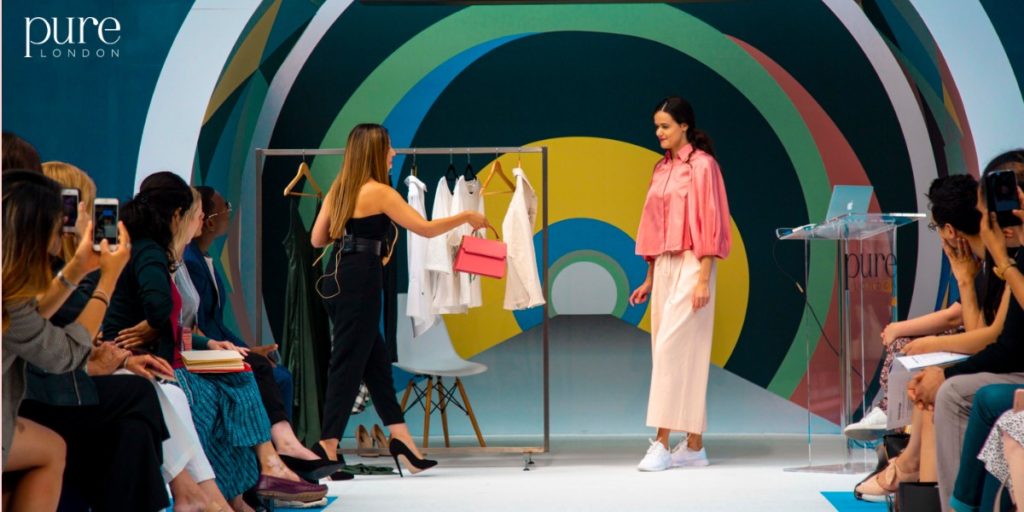
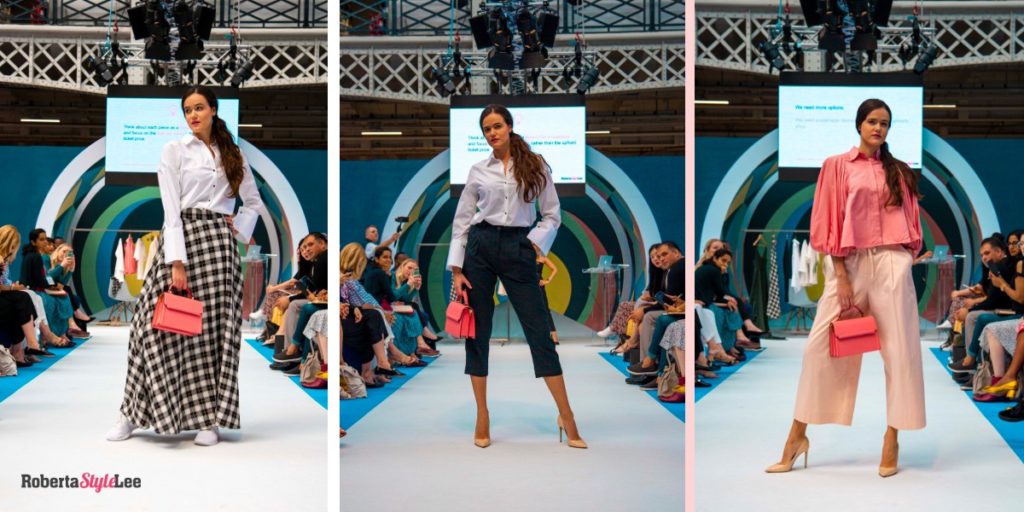
Appearing on the Pure London Future Stage – combining a sustainable fashion presentation, with live styling and a catwalk.
My Work Has Evolved
Today my work focuses on the relationship between style, identity and longevity. I work with women and brands who want their wardrobe to reflect who they are and what they stand for.
Sustainability remains part of that conversation, but the focus is broader — understanding how clothing communicates identity, confidence and values. The last 10-years enabled me to develop my IMPACT framework which now guides all the work I do with my private styling clients and commercial clients. Whilst EBD is still online, it is about to enter a new chapter for 2026 – an evolved position as a result of my journey of 10+ years working in sustainable fashion.
Useful links